Records
Record-2
The shore, the library and the first document
I am Resha.
I came back from the mountain. I set out to find someone
who would answer my questions.
I walked until I reached the sea. There is a town on the shore;
canals run through it, the houses are built out over the water.
The people here live with the sea.
I asked something. No answer.
I asked another. The man I was speaking to walked away from me.
The third one neither took offence nor scolded me.
It was a woman; she raised her hand and pointed at a small building.
Without a word.
It was a library.
Two lines were cut above the door:
no answer is given, it is written
no question is asked, it is read
Then I understood why no one had answered me.
But the meaning went deeper than I thought.
To answer a question, they hold, is to hand knowledge to one person only.
To write the answer is to answer everyone who will ask it after.
Here, speaking is counted as feeding the seed of the fruit of knowledge
to a single person, when the same seed, put into the ground,
would have fed hundreds for decades.
And the rule is finer still: to ask about something already written in the
books is shameful. If you have searched and read and found it nowhere,
then you may ask, and answering you is no longer a favour but a debt.
I had asked without searching. That was my mistake.
Now I read.
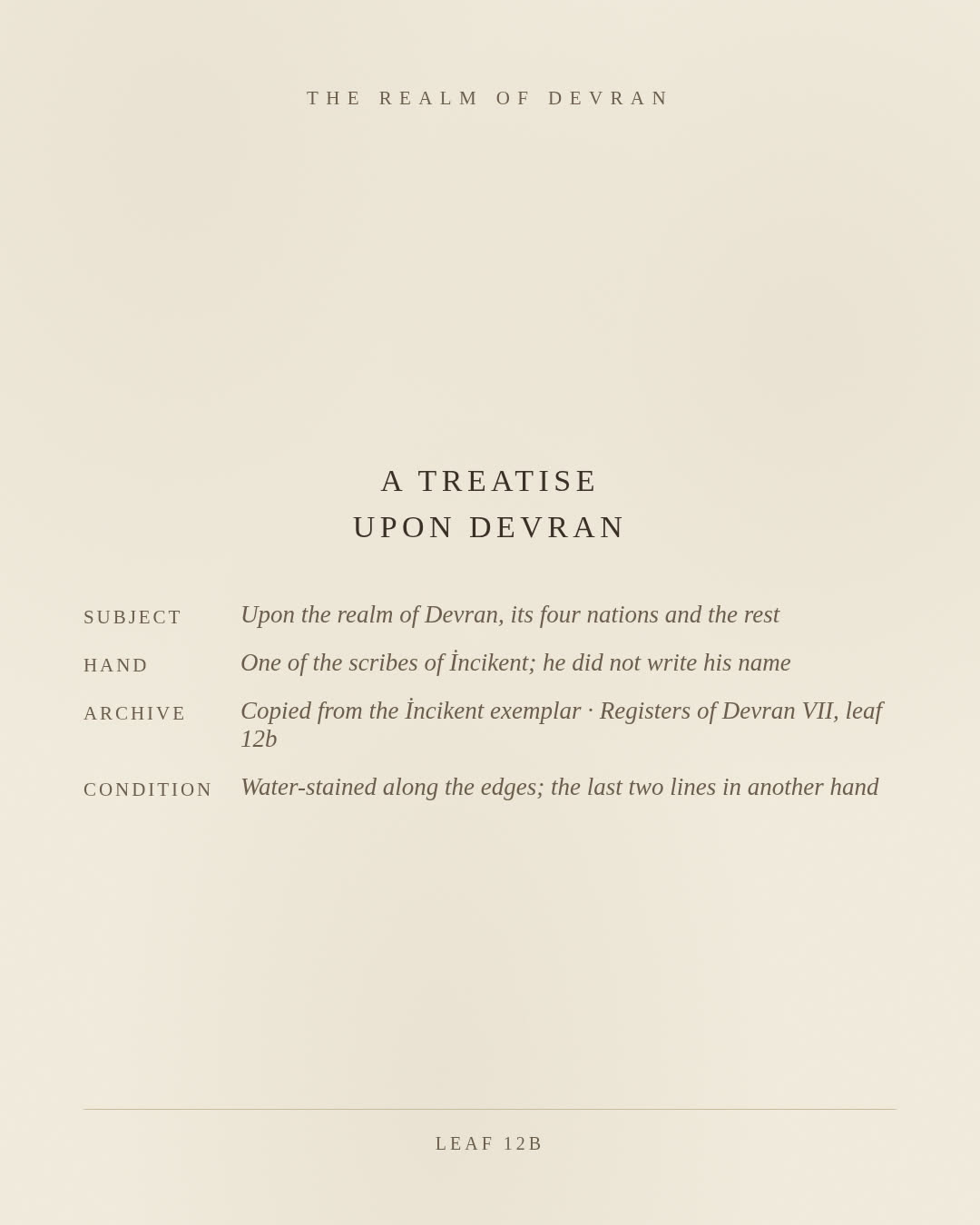
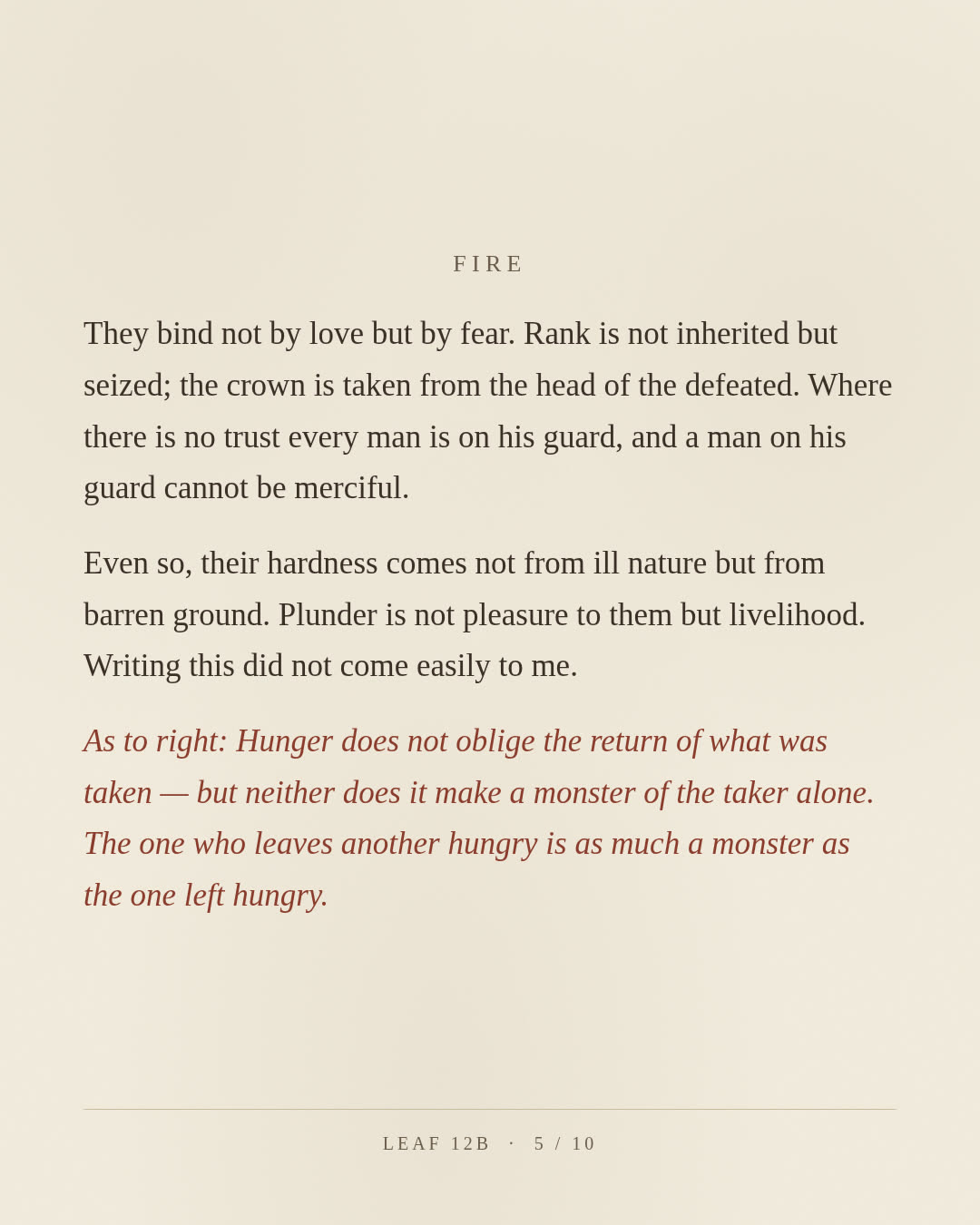
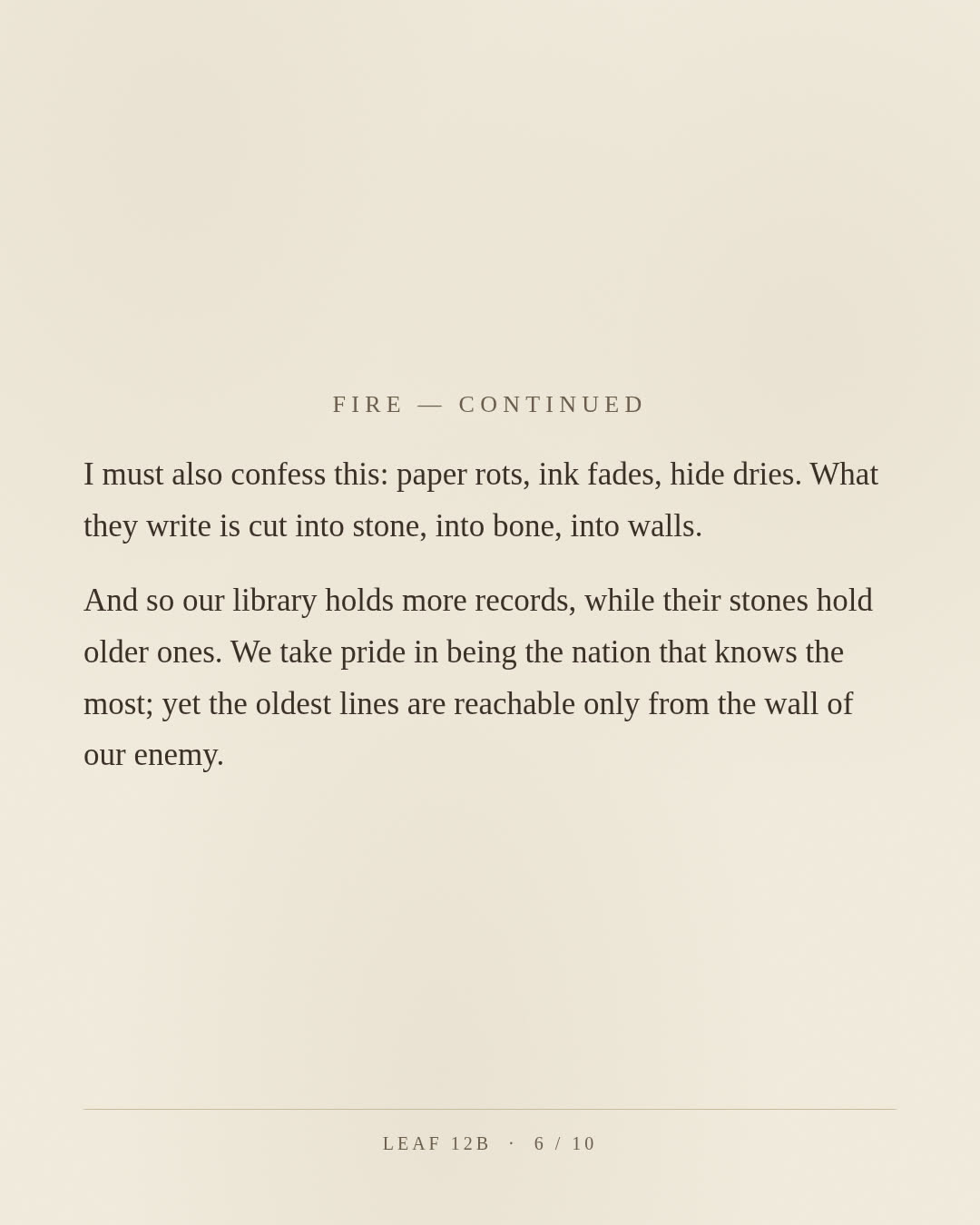
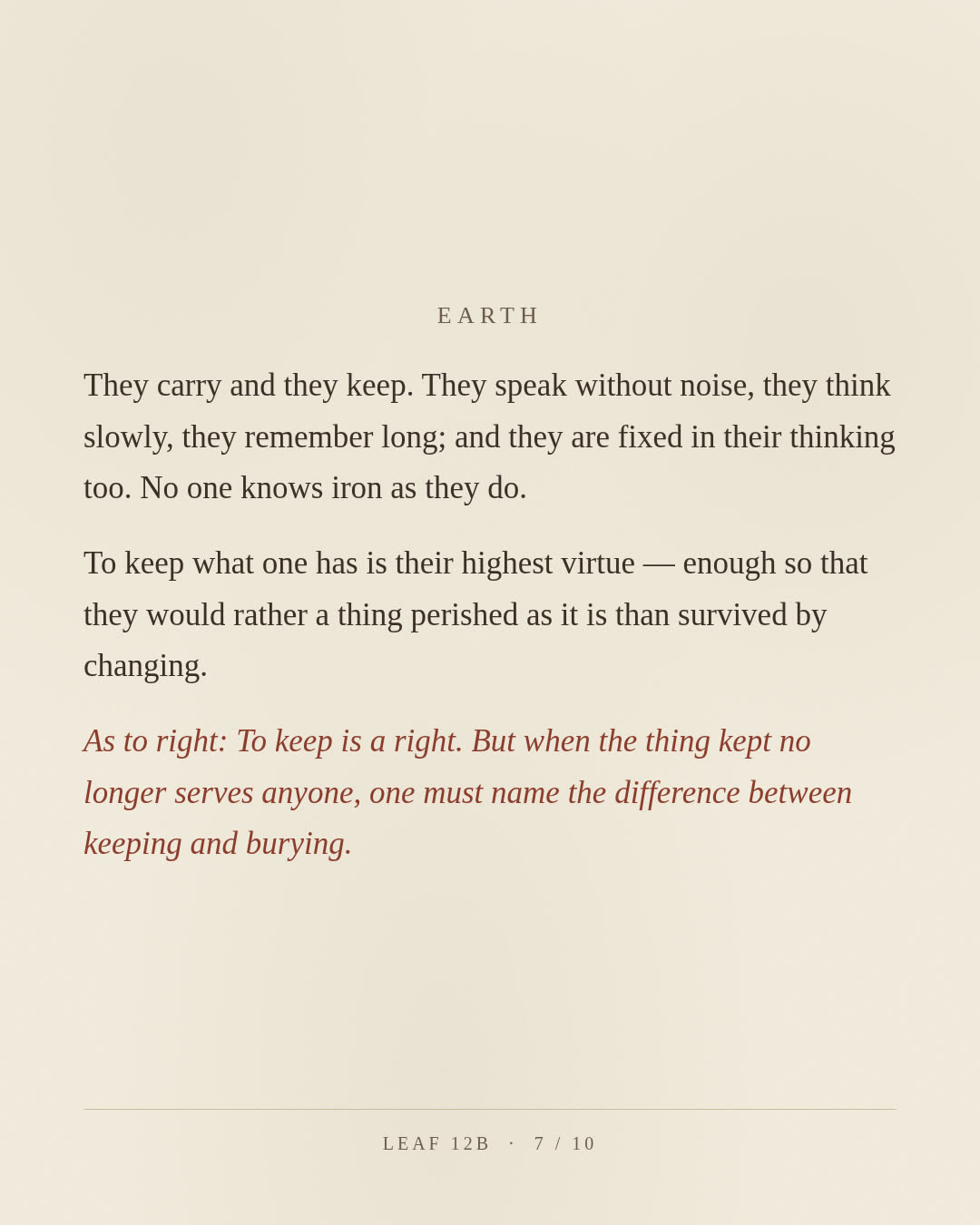
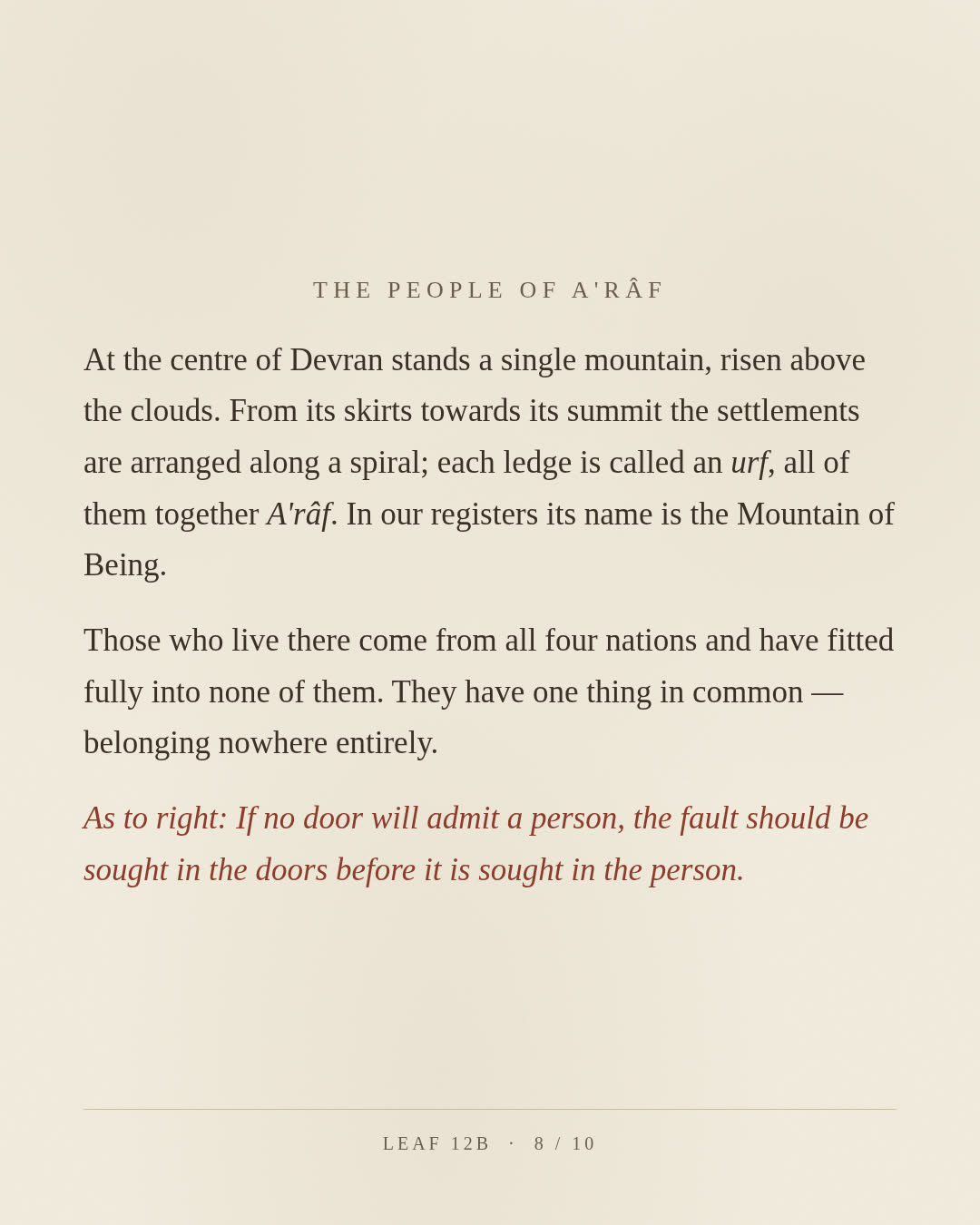
Here is the first document I found inside.
A scribe wrote it and left no name; the copyist left none either.
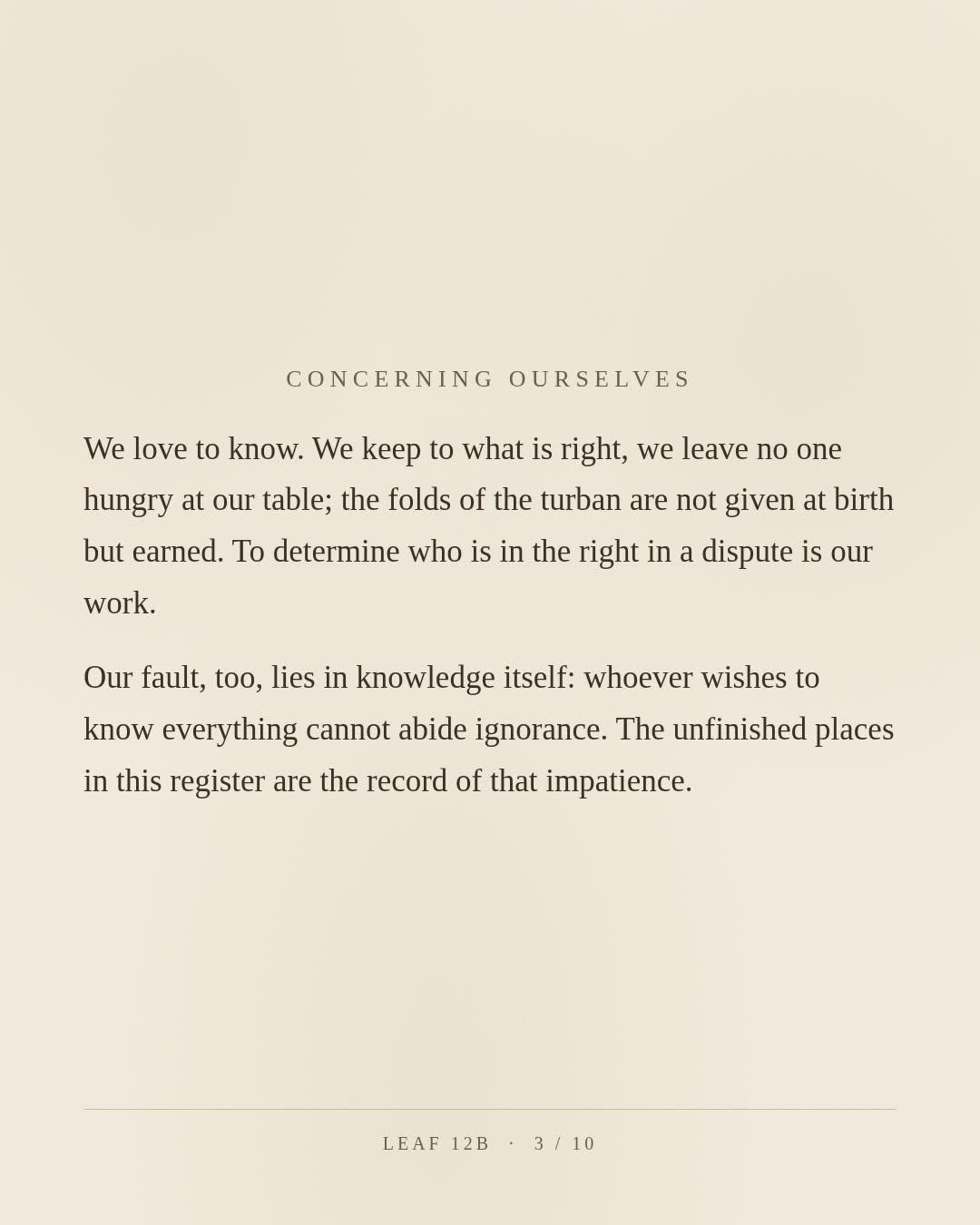
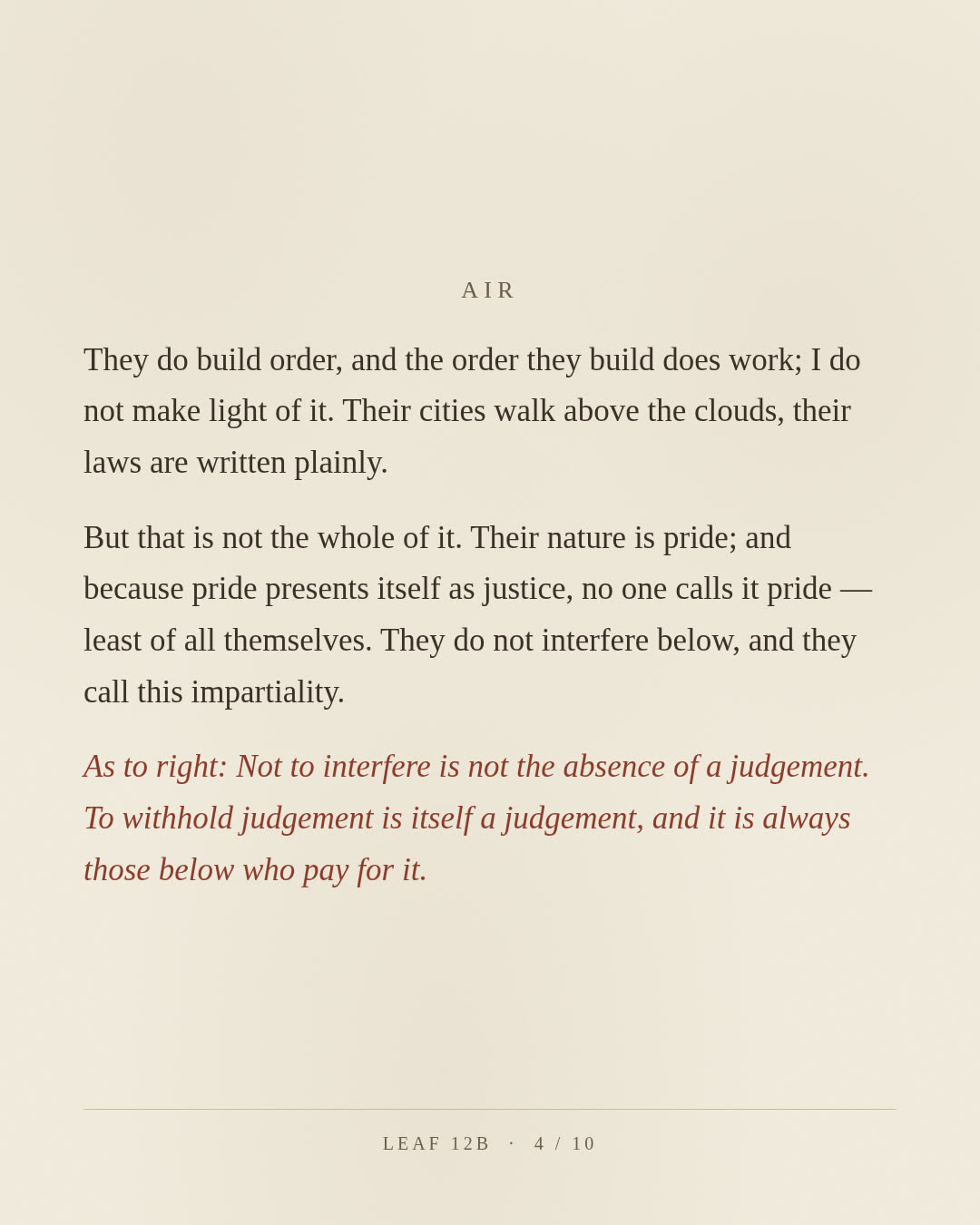
It describes all four nations one by one. Its own among them,
faults and all.
And it answered one of my questions:
the mountain is called the Mountain of Being.
Among the people, the Mountain of A’râf.
What the tree at its summit is, this register does not say.
One sentence of it stays with me:
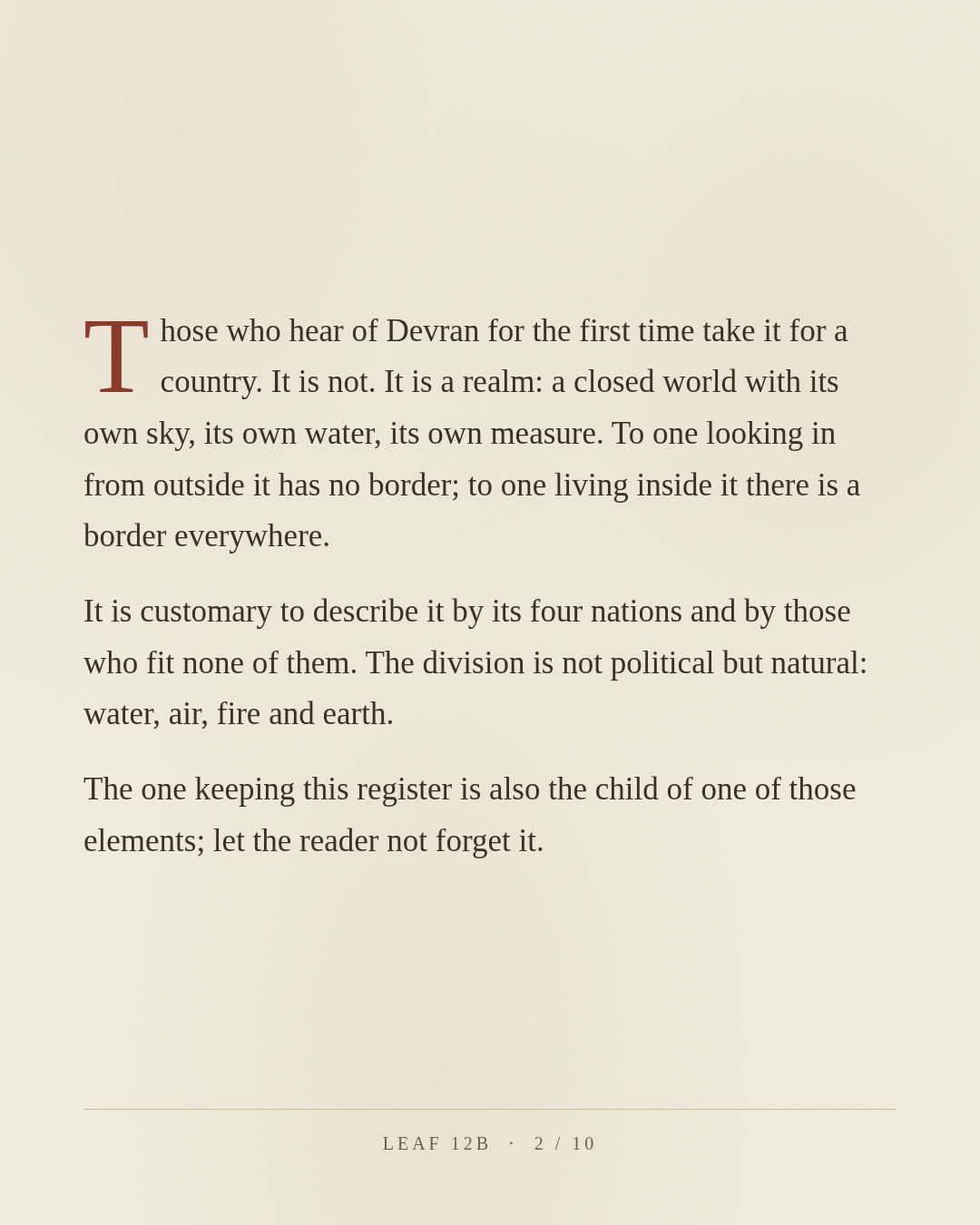
“The one keeping this register is also the child of one of those elements;
let the reader not forget it.”
I had the library drawn by an AI.
The leaves I copied as they are.